
Intro to 12 zodiac signs
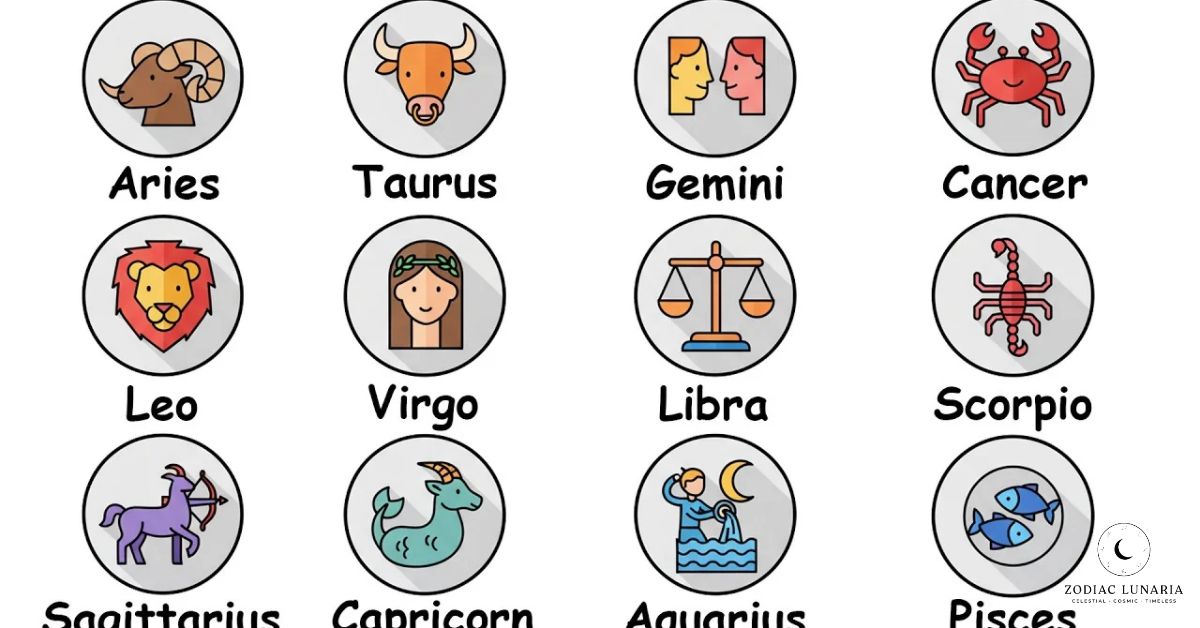
Zodiac signs offer a fascinating way to explore personality traits, emotional tendencies, relationships, and life paths through astrology. The 12 zodiac signs are based on birth dates and are divided across the 12 months of the year, from Aries in March to Pisces in February and March. Each sign has its own unique characteristics, ruling planet, and astrological symbolism that helps explain how people connect with the world around them.
Understanding zodiac signs by month, elements, and houses makes astrology easier to explore. The four elements, Fire, Earth, Air, and Water, represent different energies and personality styles, while the 12 astrological houses focus on areas of life such as love, career, family, money, and personal growth. By learning your zodiac sign’s dates, element, and house, you can discover how these astrological influences fit together in your birth chart.
12 Zodiac Signs Library
Aries
Aries (March 21 to April 19) is a Fire sign known for its courage, confidence, and adventurous spirit. Ruled by Mars, Aries individuals often enjoy taking the lead and pursuing new challenges.
Taurus
Taurus (April 20 to May 20) is an Earth sign associated with stability, patience, and loyalty. Ruled by Venus, Taurus values comfort, security, and lasting relationships.
Gemini
Gemini (May 21 to June 20) is an Air sign recognized for curiosity, communication, and adaptability. Ruled by Mercury, Gemini enjoys learning new things and connecting with different people.
You can also read: August 6 Zodiac Sign: Leo Personality, Love Compatibility & Life Path
Cancer
Cancer (June 21 to July 22) is a Water sign known for sensitivity, intuition, and emotional depth. Ruled by the Moon, Cancer often prioritizes family, home, and meaningful relationships.
Leo
Leo (July 23 to August 22) is a Fire sign associated with creativity, confidence, and generosity. Ruled by the Sun, Leo enjoys self-expression and often brings warmth and enthusiasm to social situations.
Virgo
Virgo (August 23 to September 22) is an Earth sign known for practicality, attention to detail, and organization. Ruled by Mercury, Virgo often approaches problems with careful thinking and a desire to improve things.
Libra
Libra (September 23 to October 22) is an Air sign associated with harmony, fairness, and partnership. Ruled by Venus, Libra values balance, beauty, and peaceful connections with others.
Scorpio
Scorpio (October 23 to November 21) is a Water sign recognized for passion, determination, and emotional intensity. Traditionally ruled by Mars and associated with Pluto in modern astrology, Scorpio is often linked with transformation and deep personal connections.
Sagittarius
Sagittarius (November 22 to December 21) is a Fire sign known for optimism, independence, and exploration. Ruled by Jupiter, Sagittarius is drawn to new experiences, philosophical questions, and opportunities for growth.
Capricorn
Capricorn (December 22 to January 19) is an Earth sign associated with discipline, ambition, and responsibility. Ruled by Saturn, Capricorn often values long-term planning, practical decisions, and steady progress.
Aquarius
Aquarius (January 20 to February 18) is an Air sign known for originality, independence, and forward-thinking ideas. Traditionally ruled by Saturn and associated with Uranus in modern astrology, Aquarius is often connected with innovation and social change.
Pisces
Pisces (February 19 to March 20) is a Water sign associated with imagination, compassion, and intuition. Traditionally ruled by Jupiter and associated with Neptune in modern astrology, Pisces is often drawn to creativity, spirituality, and emotional connection.
Zodiac Signs in Order: What It Means and How It’s Formed
The zodiac signs follow a traditional sequence based on the Sun’s apparent annual journey through the zodiac. The order begins with Aries, followed by Taurus, Gemini, Cancer, Leo, Virgo, Libra, Scorpio, Sagittarius, Capricorn, Aquarius, and Pisces. Each sign occupies 30 degrees of the 360-degree zodiac circle in Western tropical astrology.
This sequence also reflects the changing seasons in the Northern Hemisphere, beginning with Aries at the March equinox. Every sign has its own symbolic qualities, element, and ruling planet. Although zodiac date ranges are commonly used to identify a person’s Sun sign, exact placements can vary slightly by year and birth time, particularly for people born near the beginning or end of a sign.
Zodiac Elements Explained: Meaning and Formation
The four zodiac elements are Fire, Earth, Air, and Water. Each element groups three zodiac signs that share broad symbolic characteristics and represent different approaches to life, emotions, communication, and personal goals.
- Fire: Aries, Leo, Sagittarius. Associated with passion, action, enthusiasm, and inspiration.
- Earth: Taurus, Virgo, Capricorn. Connected with practicality, stability, patience, and material security.
- Air: Gemini, Libra, Aquarius. Represents communication, intellectual curiosity, social connections, and ideas.
- Water: Cancer, Scorpio, Pisces. Symbolizes intuition, emotional depth, empathy, and sensitivity.
The elements are arranged in a repeating pattern throughout the zodiac. They help astrologers interpret the overall character of a sign, but they do not determine a person’s entire personality. Other birth-chart placements, personal experiences, and individual choices also shape how someone expresses these qualities.
Zodiac Houses: What They Are and How They Work
In astrology, the 12 houses represent different areas of life, including identity, finances, communication, home, romance, work, partnerships, transformation, beliefs, career, friendships, and spirituality. While zodiac signs describe the style or qualities associated with a placement, houses indicate the life area where that placement may be interpreted.
The houses are calculated using a birth chart, which generally requires a person’s birth date, exact birth time, and birthplace. The Ascendant determines the starting point of the first house, and the remaining houses extend around the chart according to the house system being used. Because house placements depend on birth details, two people with the same Sun sign may have very different house arrangements.
The 12 houses are commonly interpreted as follows:
- 1st House: Identity, appearance, and first impressions.
- 2nd House: Money, possessions, values, and personal resources.
- 3rd House: Communication, learning, siblings, and everyday travel.
- 4th House: Home, family, roots, and private life.
- 5th House: Romance, creativity, hobbies, and self-expression.
- 6th House: Daily routines, work habits, service, and well-being.
- 7th House: Marriage, partnerships, and one-to-one relationships.
- 8th House: Shared resources, intimacy, transformation, and inheritances.
- 9th House: Higher education, philosophy, beliefs, and long-distance travel.
- 10th House: Career, reputation, achievements, and public life.
- 11th House: Friendships, communities, social networks, and future goals.
- 12th House: Privacy, reflection, the unconscious, and spiritual exploration.
Understanding the houses alongside zodiac signs and elements provides a broader view of an astrological birth chart. Rather than relying on a Sun sign alone, astrology combines several placements to create a more detailed symbolic interpretation of personality and life themes.
Conclusion
Understanding zodiac signs, their dates, elements, and houses makes astrology easier to explore. Each of the 12 zodiac signs has unique symbolic traits, while the four elements explain their basic energies and the 12 houses represent different areas of life. By exploring these connections, you can gain a broader understanding of your birth chart, relationships, strengths, and personal growth through the lens of astrology.

Morales es un escritor apasionado por la astrología, los signos del zodiaco y el crecimiento espiritual. Disfruta creando contenido claro y atractivo sobre horóscopos, tarot, fases de la luna y numerología para ayudar a los lectores a explorar el universo de la astrología y descubrir nuevas perspectivas sobre sí mismos.