

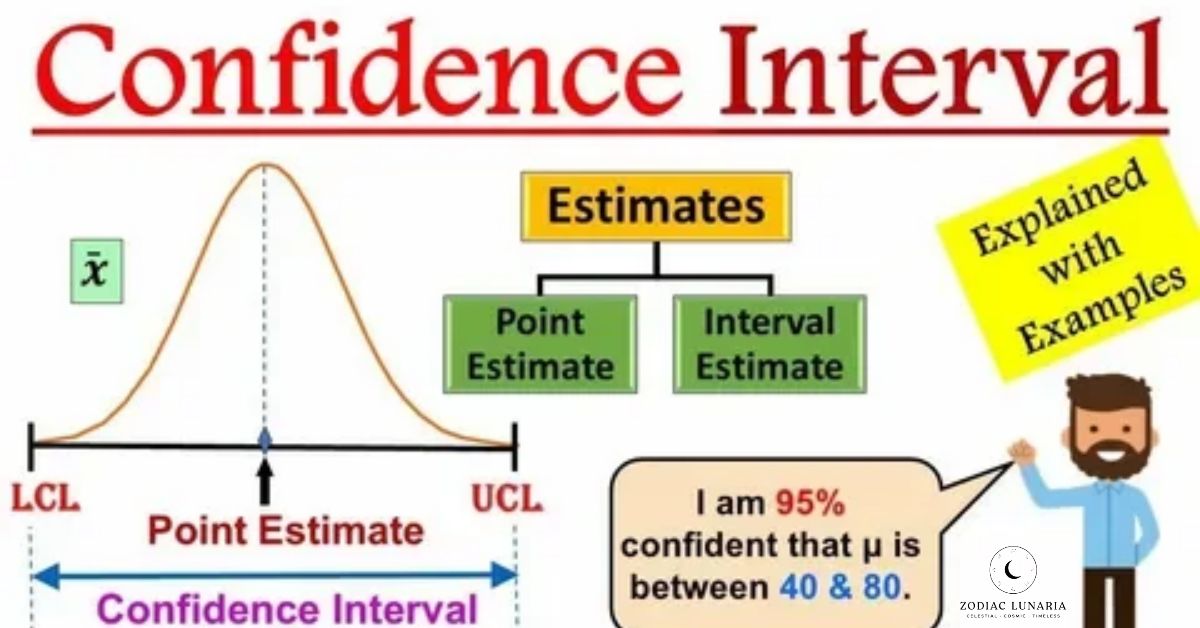
A Confidence Interval Calculator helps you estimate the range within which a population parameter, such as a mean or proportion, is likely to fall based on sample data. It makes statistical calculations easier by using values such as sample size, standard deviation, confidence level, and sample mean to calculate the confidence interval quickly and accurately. Whether you are a student, researcher, teacher, or data analyst, this tool can help you understand statistical results, measure uncertainty, and make more informed decisions without performing complex calculations manually.
Common Scenarios
Common Scenarios
– Academic Research: Students and researchers use a Confidence Interval Calculator to estimate population parameters from sample data and present reliable statistical findings.
– Business Analysis: Businesses analyze customer feedback, sales figures, and survey results to understand trends and make data-driven decisions.
– Medical Studies: Researchers use confidence intervals to evaluate clinical trial results, treatment effectiveness, and health-related data.
– Market Research: Marketing teams estimate customer preferences, buying habits, and satisfaction levels using sample surveys.
– Quality Control: Manufacturers assess product quality and production consistency by analyzing sample measurements and calculating confidence intervals.
– Election Polling: Pollsters estimate the percentage of voters supporting a candidate or policy while accounting for sampling uncertainty.
– Data Science: Analysts use confidence intervals to measure uncertainty in estimates and communicate the reliability of statistical results.
– Classroom Learning: Students use the calculator to practice statistics, understand confidence levels, and verify answers to statistical problems.
You can also read: Name Numerology Calculator – Reveal Your Destiny & Personality
Related Calculators
Sample Size Calculator
A Sample Size Calculator helps determine how many observations or participants are needed for a study to achieve reliable results. It considers factors such as confidence level, margin of error, and population size to help researchers plan their studies effectively.
Standard Deviation Calculator
A Standard Deviation Calculator measures how much data values vary from the mean. It helps users understand data distribution and calculate the variability needed for many statistical analyses, including confidence interval calculations.
Z-Score Calculator
A Z-Score Calculator determines how many standard deviations a data point is above or below the mean. It is useful for analyzing probability, comparing values, and finding critical values required for certain confidence interval calculations.
Mean, Median, Mode Calculator
A Mean, Median, Mode Calculator helps users find the average, middle value, and most frequently occurring value in a dataset. These measures of central tendency make it easier to understand data patterns and summarize information before performing further statistical analysis, including confidence interval calculations.
What Is a Confidence Interval?
A confidence interval is a range of values used to estimate an unknown population parameter based on sample data. It provides an idea of how uncertain an estimate is and how precisely a sample represents the larger population. For example, a 95% confidence interval gives a range calculated using a method that would capture the true population parameter in approximately 95% of repeated samples under the same conditions. Confidence intervals are commonly used in research, healthcare, business analysis, and statistics to interpret results and make informed decisions.
How to Calculate a Confidence Interval
– Collect Sample Data: Identify the sample mean, sample size, and standard deviation needed for the calculation.
– Choose a Confidence Level: Select a confidence level, such as 90%, 95%, or 99%, depending on your analysis requirements.
– Find the Critical Value: Determine the appropriate Z-value or t-value based on the confidence level and sample data.
– Calculate the Standard Error: Divide the standard deviation by the square root of the sample size.
– Determine the Margin of Error: Multiply the standard error by the appropriate critical value.
– Calculate the Lower Limit: Subtract the margin of error from the sample estimate.
– Calculate the Upper Limit: Add the margin of error to the sample estimate.
– Interpret the Results: Use the lower and upper limits to understand the range of plausible values for the population parameter.
How to Use This Confidence Interval Calculator
– Enter the Sample Mean: Provide the average value calculated from your sample data, if required.
– Enter the Sample Size: Input the total number of observations or participants included in your sample.
– Add the Standard Deviation: Enter the sample or population standard deviation, depending on the calculator’s requirements.
– Select the Confidence Level: Choose a confidence level, such as 90%, 95%, or 99%, to determine the desired level of statistical confidence.
– Choose the Calculation Method: Select the appropriate Z-distribution or t-distribution option if the calculator provides a choice.
– Calculate the Confidence Interval: Click the calculate button to obtain the lower and upper limits of your confidence interval.
– Review the Results: Examine the calculated interval, margin of error, and standard error to understand the precision of your estimate.
– Interpret the Output: Use the results to evaluate the uncertainty surrounding your sample estimate and support your statistical analysis.
Common Use Cases
Reporting Survey Results
A Confidence Interval Calculator helps present survey findings by showing a range of plausible values for a population percentage or average. Businesses and organizations can use these estimates to understand customer opinions, satisfaction levels, and public preferences while accounting for sampling uncertainty.
Research & Theses
Students, researchers, and academic professionals use confidence intervals to report statistical findings in research papers, theses, and dissertations. They help communicate the precision of estimates and provide additional context when interpreting study results.
Small-Sample Studies
When working with a small sample, researchers often use a t-distribution to calculate a confidence interval for a population mean when the population standard deviation is unknown and the relevant assumptions are reasonable. This approach helps estimate uncertainty while accounting for the limited sample size.
A/B Testing
Digital marketers and product teams use confidence intervals to compare conversion rates, click-through rates, and other performance metrics between two versions of a webpage, advertisement, or application. These intervals help assess the uncertainty surrounding observed differences and support better testing decisions.
Quality Control
Manufacturers and quality assurance teams use confidence intervals to evaluate product measurements, production performance, and process consistency. They help estimate population characteristics from sampled products and identify results that may require further investigation.
Checking Homework
Students can use a Confidence Interval Calculator to verify statistical homework, check manual calculations, and understand how sample size, standard deviation, and confidence levels affect results. It is also a useful learning tool for practicing statistics and preparing for exams.
Why Use a Confidence Interval Calculator?
Mean or Proportion
A Confidence Interval Calculator helps estimate population means or proportions using sample data. Whether you are analyzing average test scores, customer satisfaction, or survey responses, it provides a useful range of values for interpreting your results.
Correct z or t Interval
The calculator helps determine the appropriate confidence interval method based on the available data and statistical assumptions. A Z-interval is commonly used when the population standard deviation is known, while a t-interval is often used when it is unknown and estimated from the sample.
See the Full Picture
A confidence interval provides more information than a single estimate. By displaying lower and upper limits, it helps users understand the uncertainty surrounding their results and evaluate how precisely the sample estimates a population parameter.
Compare Confidence Levels
You can compare confidence levels such as 90%, 95%, and 99% to see how they affect the interval’s width. Higher confidence levels generally produce wider intervals when the other inputs remain unchanged.
Step-by-Step Math
A Confidence Interval Calculator simplifies statistical calculations by determining values such as the standard error, critical value, and margin of error. These results help students and researchers follow the calculation process and verify their work.
Free and Instant
An online Confidence Interval Calculator provides quick results without requiring complicated manual calculations or specialized software. It is convenient for students, teachers, researchers, and professionals who need fast statistical estimates for learning, analysis, or reporting.
FAQs
What is a Confidence Interval Calculator?
A Confidence Interval Calculator is an online tool that estimates a range of values for a population parameter using sample data, a selected confidence level, and relevant statistical inputs.
What is a 95% confidence interval?
A 95% confidence interval is a range calculated using a method that would contain the true population parameter in approximately 95% of repeated samples under the same assumptions.
What information do I need to calculate a confidence interval?
You typically need the sample mean or proportion, sample size, standard deviation or relevant sample counts, and the desired confidence level.
What is the difference between a Z-interval and a t-interval?
A Z-interval uses the standard normal distribution, while a t-interval uses the t-distribution. The t-interval is commonly used to estimate a population mean when the population standard deviation is unknown.
Does a higher confidence level make the interval wider?
Yes. When other factors remain constant, a higher confidence level generally produces a wider interval because more confidence requires a broader range of plausible values.
Can I calculate a confidence interval for a proportion?
Yes. You can calculate a confidence interval for proportions, such as survey response percentages, election polling results, and conversion rates, using an appropriate statistical method.
Is a Confidence Interval Calculator free to use?
Many online Confidence Interval Calculators are free and provide instant results without requiring manual calculations or specialized statistical software.
How do I interpret the confidence interval results?
The lower and upper limits show the range of values supported by the sample data under the chosen method. A narrower interval generally indicates greater precision, while a wider interval indicates more uncertainty.

Morales es un escritor apasionado por la astrología, los signos del zodiaco y el crecimiento espiritual. Disfruta creando contenido claro y atractivo sobre horóscopos, tarot, fases de la luna y numerología para ayudar a los lectores a explorar el universo de la astrología y descubrir nuevas perspectivas sobre sí mismos.